Structural Drying in San Marcos, CA
A floor that looks dry can still hold water in the slab, the drywall and the framing. The drying team measures first, sets equipment to each room's load and leaves it running until readings match a dry reference.
(888) 450-9281Get the San Marcos dry-out started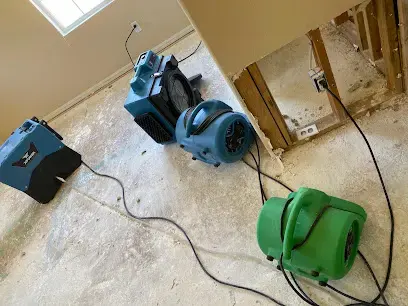
First steps for structural drying
- 1
Keep windows closed during drying
Once dehumidifiers run, outside air can slow drying, especially on humid coastal days.
- 2
Leave the equipment running
Turning air movers off at night lets moisture settle back into materials.
- 3
Keep the thermostat steady
Comfortable room temperatures help evaporation; the drying team may ask for a specific setting.
- 4
Clear a path for daily checks
Readings are taken in the same spots each day.
How structural drying is handled
Class decides the equipment
The walkthrough tech sets the class of loss, Class 1 through 4, which decides how many air movers and how much dehumidification a room needs.
The right dehumidifier
LGR dehumidifiers handle most losses; desiccant units dry dense Class 4 materials like hardwood, plaster and concrete.
Readings end the job
The drying team logs psychrometric readings and material moisture daily and removes equipment only when materials reach the goal.
What does structural drying cost in San Marcos, CA?
In San Marcos, CA, structural drying typically runs $1,000 to $6,000, depending on the class of loss, how many rooms need equipment, the materials involved and how many drying days the readings require.
For a closer planning number, try the water damage cost calculator.
The structural drying process in San Marcos
- 1
Measure
Moisture map and dry reference readings on day one.
- 2
Set equipment
Air movers and dehumidifiers sized to each room's load.
- 3
Monitor
Daily readings, equipment moved as areas dry.
- 4
Verify and remove
Equipment leaves when readings meet the goal, not by the calendar.
Structural drying, not surface drying
Surface drying makes a room look finished. Structural drying gets the water out of the slab, the bottom plate, the drywall and the subfloor, which is where mold and odor start when drying is skipped. IICRC S500 is the industry drying standard, and it ties the end of the job to measurements rather than a set number of days.
- Moisture mapping: meters and thermal imaging outline every wet area before equipment goes down.
- Air movers: set to the evaporation load of each room, aimed along wet walls and floors.
- LGR dehumidifiers: pull the evaporated moisture out of the air.
- Desiccants: used for Class 4 materials that hold water tightly.
San Marcos conditions
Inland North County air is usually dry, which helps, but slab-on-grade homes hold water in the concrete, and humid marine-layer mornings can slow evaporation. Hardwood floors and cabinets need careful, slower drying so they do not crack or cup. The drying team adjusts equipment daily as areas reach the goal.
The drying log
Daily psychrometric readings, material readings and photos form the drying log, which is the backbone of a clean insurance file. EPA indoor air quality information explains the link between damp materials and indoor air, and Ready.gov covers safety after water enters a home. To estimate a timeline, try the drying time estimator.
Structural drying across San Marcos
The San Marcos restoration crew covers the whole city, including San Elijo Hills, Discovery Hills, Lake San Marcos, Twin Oaks Valley, Santa Fe Hills, Old Creek Ranch, plus ZIP codes 92069, 92078, 92079, 92096, and the edges of Escondido, Vista and Carlsbad.
See every area and ZIP coveredStructural drying questions
Equipment leaves on readings, not on a schedule, and that is what keeps mold out of the walls.
(888) 450-9281What does IICRC S500 mean?
It is the industry standard for professional water damage restoration. It covers how losses are categorized and classified, how drying is set up and how drying is verified with measurements.
How is dry defined?
Wet materials are compared to the same material in an unaffected area. When readings fall within about 2 to 4 points of that dry reference, the material is considered dry.
Why so many fans?
Air movers are sized to the evaporation load of each room. Too few leave water in walls and floors; the class of loss decides the count.
How long does structural drying take?
A contained Class 1 or 2 loss usually dries in three to five days. Hardwood, plaster and concrete take longer.
Can I turn the equipment off at night?
It is better not to. Drying slows sharply when equipment stops, and moisture can move back into materials.
Is drying covered by insurance?
Drying after a covered sudden water loss is usually part of the claim. Coverage depends on your policy, so it is worth checking with your own insurer.
Need a San Marcos home dried the right way?
The drying team measures first, sets equipment to each room and removes it only when the readings say dry.