Condo and Townhome Water Damage in San Marcos, CA
In stacked and attached housing, one failed supply line can wet three units. The response team traces where the water came from, dries every affected unit and documents it so owners, tenants and the HOA can sort out the claim.
(888) 450-9281Leak between units? Call now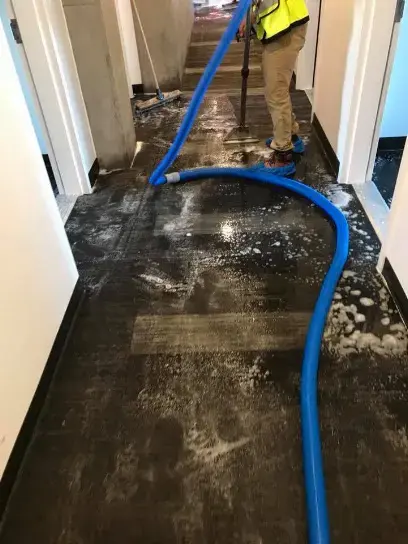
First steps for condo and townhome water damage
- 1
Find the source unit
Water on your ceiling usually comes from above; water at a shared wall may come from next door.
- 2
Tell the neighbor and the HOA
Early notice lets the source unit shut off its valve and the association's manager respond.
- 3
Photograph every wet area
Include ceilings, walls and flooring in each unit involved.
- 4
Tenants: notify the landlord
Renters near Cal State San Marcos and Palomar College should report the leak in writing.
How condo and townhome water damage is handled
Tracing across units
The walkthrough tech maps moisture in the source unit and every neighboring unit, since water follows pipe chases and shared framing.
Drying shared assemblies
The drying team dries shared walls, floor-ceiling assemblies and hallways together so one unit does not re-wet another.
Documentation by unit
Each unit gets its own photos, moisture map and daily readings, which helps owners, landlords and the association separate responsibilities.
What does condo and townhome water damage cost in San Marcos, CA?
In San Marcos, CA, condo and townhome water damage typically runs $1,200 to $9,000 across the affected units, depending on how many units the water reached, whether ceilings and shared walls must be opened, and how long the leak ran.
For a closer planning number, try the water damage cost calculator.
The condo and townhome water damage process in San Marcos
- 1
Trace
Moisture mapped in the source unit and each neighbor.
- 2
Extract and open
Water removed; ceilings or wall bottoms opened where readings demand.
- 3
Dry together
Shared assemblies dried at the same time across units.
- 4
Document
Per-unit readings and photos for owners and the HOA.
Why attached housing is its own kind of loss
San Marcos has a large share of condos, townhomes and apartments, especially around Cal State San Marcos, Palomar College and the SR-78 corridor. Units share walls, plumbing chases and floor-ceiling assemblies, so water rarely stays in one unit. A washer hose on the third floor can show up as a ceiling stain two floors down.
- Leaks from the unit above through the ceiling
- Shower and tub leaks into a neighbor's shared wall
- Water heater closets that sit against a neighbor's bedroom
- Corridor and stairwell flooding in larger buildings
Who handles what
The association usually covers common elements and the building structure, while each owner covers their unit's interior, and tenants cover their belongings. The exact split depends on the CC&Rs and each policy. The restoration contractor who responds does not decide responsibility, but a clear per-unit moisture map and daily readings make those decisions easier.
References
The California Department of Insurance explains condo and renters coverage basics, and EPA indoor air quality information covers why damp building materials matter indoors. For the leak itself, see ceiling leak water damage or appliance leak cleanup.
Condo and townhome water damage across San Marcos
The San Marcos restoration crew covers the whole city, including San Elijo Hills, Discovery Hills, Lake San Marcos, Twin Oaks Valley, Santa Fe Hills, Old Creek Ranch, plus ZIP codes 92069, 92078, 92079, 92096, and the edges of Escondido, Vista and Carlsbad.
See every area and ZIP coveredCondo and townhome water damage questions
Water in attached housing crosses unit lines, so the drying plan has to cross them too.
(888) 450-9281Who is responsible when water comes from the unit above?
It depends on the association's CC&Rs, where the leak started and each owner's policy. Documentation from both units helps sort it out; coverage depends on your policy, so it is worth checking with your own insurer.
Can one unit be dried while the neighbor waits?
It works poorly. Shared walls and ceilings dry best when every wet side is dried at the same time, otherwise moisture moves back.
I rent near Cal State San Marcos. What should I do?
Stop the water if you can, notify the landlord or property manager in writing, photograph the damage and protect your belongings. Renters insurance may cover your personal items.
Do ceilings between floors have to be opened?
Only where readings show wet insulation or drywall that will not dry in place. Small, clean-water leaks can often be dried through small openings.
How long does multi-unit drying take?
A contained leak affecting two units usually dries in three to five days. Larger losses with hallways or several units take longer.
Can the HOA manager arrange the cleanup?
Often, for common areas. Owners can also call directly for their own unit; per-unit documentation keeps everything consistent.
Water crossing units in a San Marcos building?
The response team maps every affected unit, dries shared walls together and documents each unit separately.