Roof Leak Water Damage in San Marcos, CA
Concrete and clay tile roofs shed most rain, but the underlayment beneath them wears out, and the first big storm of the season finds every gap. The drying team dries the attic, the ceiling and the walls below.
(888) 450-9281Rain coming through the roof? Call now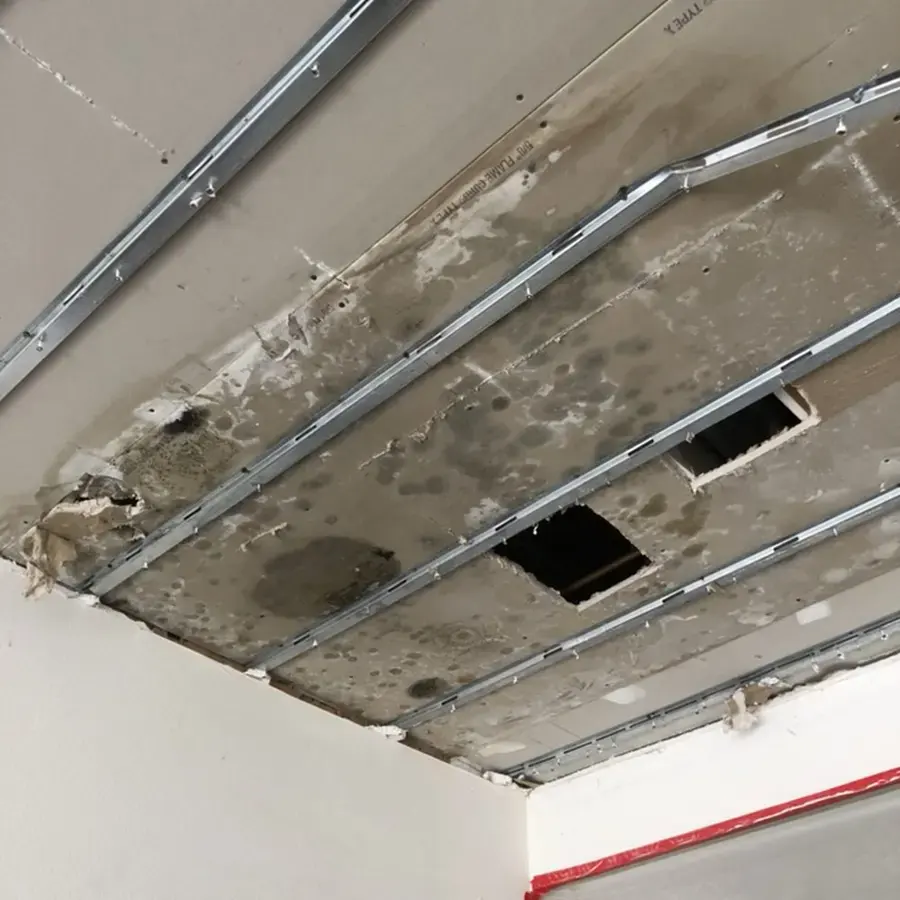
First steps for roof leak water damage
- 1
Catch the drip
A bucket and a towel under the drip protect the floor while the storm passes.
- 2
Relieve a bulging ceiling
Only if it is safe: a small hole at the lowest point of a sagging bubble drains it before it drops.
- 3
Stay out of the attic in the storm
Wet ceiling drywall will not hold weight, and wiring may be wet.
- 4
Photograph ceilings and the attic
Stains, sagging and wet insulation are all part of the claim file.
How roof leak water damage is handled
Tracing the path
The walkthrough tech follows the water from the stain back to where it entered, because roof water often runs along framing before it drips.
Wet insulation comes out
Soaked blown-in or batt insulation holds water against the ceiling, so the mitigation team removes it to let the drywall and framing dry.
Drying top down
The drying team dries the attic space, the ceiling and the wall tops together, and a roofer handles the roof repair itself.
What does roof leak water damage cost in San Marcos, CA?
In San Marcos, CA, roof leak water damage cleanup typically runs $1,000 to $6,500, depending on how much ceiling and insulation got wet, whether water reached the walls and floor, and how long the leak ran.
For a closer planning number, try the water damage cost calculator.
The roof leak water damage process in San Marcos
- 1
Find the entry
Thermal imaging and meters map the wet ceiling and attic.
- 2
Protect and remove
Wet insulation and failed ceiling sections come out.
- 3
Dry
Air movers and LGR dehumidifiers dry the attic, ceiling and walls.
- 4
Verify
Readings are logged until materials meet the drying goal.
Why San Marcos roofs leak in the first storm
Most San Marcos homes built from the 1980s onward carry concrete or clay tile. The tile itself lasts a long time, but the felt underlayment beneath it dries out and cracks after years of sun, and nobody notices through the long dry season. The first heavy storm then pushes water past the tile and through the tired underlayment, usually at valleys, chimneys, skylights and roof vents.
- Brown rings on a ceiling after the first rain of the season
- A musty attic smell or damp insulation
- Bubbling paint where a wall meets the ceiling
- Drips at light fixtures or smoke detectors
What the restoration side covers
A roofer stops the water getting in. The restoration contractor who responds deals with the water that already did: wet insulation, ceiling drywall, top plates and anything below. Ceiling drywall that sagged, or insulation that stayed wet, is removed; framing is dried in place and verified with meters.
Keeping the claim straight
Storm damage to a roof and the interior water damage it causes are often handled together on a homeowners claim. Photos of the ceiling, the attic and the roof, plus daily readings, make the file clear. The National Weather Service San Diego office records storm dates, and FEMA flood maps help separate roof water from surface flooding. For leaks from plumbing upstairs, see ceiling leak water damage.
Roof leak water damage across San Marcos
The San Marcos restoration crew covers the whole city, including San Elijo Hills, Discovery Hills, Lake San Marcos, Twin Oaks Valley, Santa Fe Hills, Old Creek Ranch, plus ZIP codes 92069, 92078, 92079, 92096, and the edges of Escondido, Vista and Carlsbad.
See every area and ZIP coveredRoof leak water damage questions
Water that got through the roof keeps soaking insulation and drywall after the rain stops.
(888) 450-9281Will the ceiling stain dry out on its own?
The surface may look dry within days, but wet insulation above it can hold water against the drywall for weeks. Meters and a thermal camera show whether the materials are actually dry.
Does wet insulation have to be replaced?
Usually. Blown-in and batt insulation that got soaked compacts and holds moisture, so it is removed to let the ceiling and framing dry and replaced after.
Who fixes the roof?
A roofing contractor repairs the roof. The restoration team handles the interior water damage and can document it for the claim.
How long does ceiling drying take?
A small area often dries in two to four days after wet insulation is removed. Larger areas or wet wall cavities take longer.
Is roof leak damage covered by insurance?
Sudden storm damage and the water that follows are often covered, while leaks from long-term wear may not be. Coverage depends on your policy, so it is worth checking with your own insurer.
Can a tarp stop the leak for now?
A properly placed roof tarp can limit further water until a roofer repairs the underlayment. Stay off wet tile roofs; they are slippery and tiles crack underfoot.
Roof leak soaking a San Marcos ceiling?
The drying team removes wet insulation, dries the ceiling and walls, and logs readings until the goal is met.