Sewage Backup Cleanup in San Marcos, CA
Sewage backup is Category 3 the moment it happens. The mitigation team contains the area, removes porous materials the sewage touched, cleans and treats every surface and dries the structure.
(888) 450-9281Sewage in the house? Call for cleanup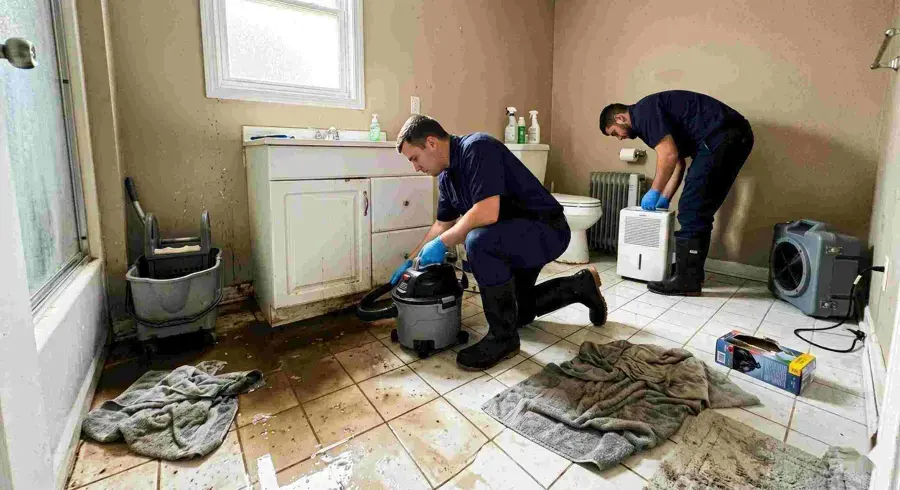
First steps for sewage backup cleanup
- 1
Stop using water
Every flush, shower or load of laundry adds to the backup until the line is cleared.
- 2
Leave the area
Keep children, pets and anyone with a weak immune system away.
- 3
Do not run the HVAC over it
Forced air can spread odor and contaminants through the house.
- 4
Call a plumber for the line
The blockage or break in the sewer line has to be cleared before cleanup finishes.
How sewage backup cleanup is handled
Contained first
The mitigation team sets containment and HEPA air scrubbers so contamination does not travel to clean rooms.
Removed, not dried
Carpet, pad, drywall and other porous materials touched by sewage are cut out, bagged and hauled away.
Cleaned, treated, verified
Hard surfaces are cleaned and treated with an EPA-registered antimicrobial at its label dwell time, then dried and checked with meters.
What does sewage backup cleanup cost in San Marcos, CA?
In San Marcos, CA, sewage backup cleanup typically runs $2,000 to $10,000, depending on how much area the sewage reached, how much carpet and drywall must come out, and whether it spread beyond one bathroom or laundry room.
For a closer planning number, try the water damage cost calculator.
The sewage backup cleanup process in San Marcos
- 1
Contain
Barriers, negative air and HEPA filtration go up first.
- 2
Remove
Sewage extracted, porous materials cut out and bagged.
- 3
Clean and treat
Surfaces cleaned and an EPA-registered antimicrobial applied.
- 4
Dry and verify
Drying equipment runs until readings meet the goal.
What causes sewage backups in San Marcos
Most backups start in the lateral, the pipe from the house to the city sewer. Roots from mature trees work into older clay and cast iron joints, grease builds up in kitchen lines, and wipes snag in low spots. Heavy winter storms can also stress sewer systems. Homes near Lake San Marcos and in older parts of the city may also have aging laterals or private systems.
- Water rising in a tub or shower when a toilet is flushed
- Gurgling drains and a sewer odor
- Several fixtures backing up at the same time
- Water around a floor drain or the cleanout in the yard
Why sewage is handled differently
Sewage carries bacteria, viruses and parasites. Porous materials it touched cannot be made safe by drying, so they come out. PPE minimums include gloves, eye protection, boots and respiratory protection, and the mitigation team works inside containment. Only after cleaning and an EPA-registered antimicrobial does the drying team set air movers.
References
EPA information on sanitary sewer overflows explains the health risks, and OSHA flood and cleanup guidance covers protective equipment. A backup that started at one toilet is handled under toilet overflow cleanup; floodwater from outside is handled as storm runoff flooding.
Sewage backup cleanup across San Marcos
The San Marcos restoration crew covers the whole city, including San Elijo Hills, Discovery Hills, Lake San Marcos, Twin Oaks Valley, Santa Fe Hills, Old Creek Ranch, plus ZIP codes 92069, 92078, 92079, 92096, and the edges of Escondido, Vista and Carlsbad.
See every area and ZIP coveredSewage backup cleanup questions
Sewage is Category 3 from the first minute; drying it in place is not an option.
(888) 450-9281Can I clean up a small sewage backup myself?
A tiny backup confined to tile may be manageable with protective gear, but sewage that reached carpet, drywall or several rooms needs containment, removal of porous materials and professional disinfection.
What has to be thrown away?
Carpet, pad, upholstered furniture, mattresses, drywall and insulation touched by sewage are normally removed. Hard, non-porous items can often be cleaned and disinfected.
Is it safe to stay in the house?
Stay out of the affected area. People who are pregnant, elderly, very young or immune-compromised should avoid the house until cleanup and disinfection are done.
Who clears the sewer line?
A plumber clears the blockage or repairs the line, often with a camera inspection. The restoration team handles the contaminated rooms.
Is sewage backup covered by insurance?
Many homeowners policies require a separate sewer or water backup endorsement. Coverage depends on your policy, so it is worth checking with your own insurer.
How long does sewage cleanup take?
Removal and disinfection often take one to two days, followed by two to four days of drying, depending on the size of the area.
Sewage backup in a San Marcos home?
The mitigation team contains the area, removes what the sewage touched, disinfects and dries to the goal.